
You’ve spent years mapping your customer experience. Good. Now comes the part almost no one does: acting on it with real strategic intent.
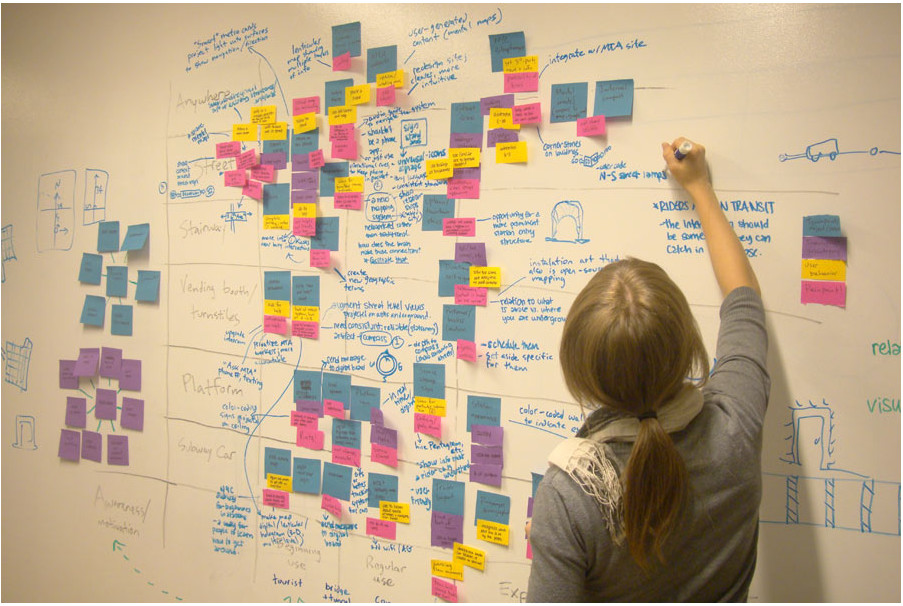
The Customer Journey has become one of the most popular exercises in recent years in any organization that claims to be customer-centric. Co-creation workshops, colorful post-its, huge maps on the wall with arrows, happy and sad face emojis, moments of truth highlighted in red.
And after all that… what happens?
In most cases: not much. The map stays on the wall. Or in a presentation someone files away. Or in a report the CX team presents to the board once a year, feeling satisfied because they’ve “completed the exercise.”
The problem isn’t the Customer Journey. The problem is that many organizations have mistaken it for an end in itself, when in reality it’s just the starting point.
“Mapping the Customer Journey without a clear action plan is like getting a full medical diagnosis and then not taking any medication.”
Why the map alone doesn’t drive change
The Customer Journey is a tool for understanding. It shows where the pain is, where trust is lost, where the customer drops off. It’s valuable. But it has a clear limitation: it describes the present. It doesn’t transform anything.
For that map to become a real business lever, three things are needed—things that are rarely worked on with the same intensity as the mapping itself.
The first is real prioritization. Not all friction points in the journey deserve the same attention. Some moments annoy the customer but don’t affect their decision to stay or leave. Others—the critical moments—mean that a poor experience directly results in a lost customer. Knowing how to distinguish them, and acting first on those with the greatest business impact, is what separates a CX strategy from a backlog of improvements.
The second is translating insights into operational decisions. The journey identifies that “the customer feels uninformed during the onboarding process.” Fine. Now what? Who fixes it? With what resources? In what timeframe? How do we measure that it’s been resolved? Without these answers, the insight evaporates.
The third—and where most organizations fall short—is governance. Someone must be accountable for ensuring decisions are made, executed, and reviewed. Without a clear governance model, customer experience becomes no one’s land: everyone says it matters, no one owns it.
• 89% of companies compete primarily on customer experience (Gartner)
• Only 1 in 3 CX initiatives generates measurable business impact (McKinsey)
• It is 5–7x more expensive to acquire a new customer than to retain an existing one
That second figure is the most concerning: only one in three CX initiatives actually delivers real business impact. Not because the tools are flawed, but because the work that comes after the map—the hard, operational work of deciding and executing—is not done with the same energy as the workshop.
From map to system: what it really means to manage experience
Managing customer experience is not about creating a journey map every two years. It’s about building a system that continuously listens, prioritizes, acts, and learns.
Continuous listening means having mechanisms that capture the voice of the customer in real time, not just through periodic surveys. A customer who drops out midway through a process won’t wait three weeks for a questionnaire.
Prioritizing with intent means combining experience data with business data. It’s not enough to know something frustrates the customer—you need to understand the cost of that friction to the business. That intersection turns an experience issue into a compelling case for investment.
Acting in a coordinated way means CX cannot sit solely within the CX team. Customer friction usually originates in operations, technology, or internal processes that haven’t been reviewed in years. Fixing customer experience almost always means fixing something broken internally.
And finally, learning means closing the loop: measuring whether changes worked, adjusting, and starting again. Not as a project with a deadline, but as a permanent management model.
“The companies that lead in customer experience are not the ones with the best map. They are the ones that have built the best system to act on it.”
One uncomfortable question to ask today
If your organization has invested time and resources in mapping the Customer Journey, there’s one question worth asking directly: what has actually changed in the real customer experience since that map was created?
Not in the improvement plan. Not in the roadmap. In the real experience—the one customers live when they interact with your company today.
If the answer is “not much” or “we’re not sure,” the problem isn’t the journey. It’s what comes next. And that’s exactly where the real work begins.
You already have the map. Now it’s time to use it.
At Consulting C3, we help organizations turn their Customer Experience strategies into management systems that deliver real business impact—from prioritizing critical moments to designing governance models that actually work. If you have the map but are missing the next step, let’s talk.